

Many businesses focus on speed and uptime when choosing hosting. Few think about legal risk. In the United Arab Emirates, hosting is not only technical. It is also legal.
This guide explains UAE web hosting compliance in plain language: which data laws apply, what they mean for where your website is hosted, and how to choose a provider that keeps you on the right side of the rules.
If your website stores customer data, you must follow local regulations. Ignoring compliance can lead to fines, penalties, and loss of trust.
This is why UAE web hosting compliance is now a serious business priority.
Khaleej Host understands this reality and provides hosting solutions built not only for performance and reliability, but also for security, regulatory awareness, and long-term business protection in the UAE.
Table of Contents
Why UAE Web Hosting Compliance Matters
Related read: Best Web Hosting in UAE: Complete Guide for Businesses 2026
Web hosting affects how and where your data is stored. It also affects who can access it. UAE authorities have clear expectations about data protection, privacy, and cybersecurity.
If your hosting provider does not meet legal standards, your business may face consequences, even if the mistake was not directly yours.
That is why understanding UAE data laws and hosting requirements is essential. Choosing a compliant hosting partner like Khaleej Host is essential for protecting both your operations and your reputation.
Understanding UAE Data Protection Laws
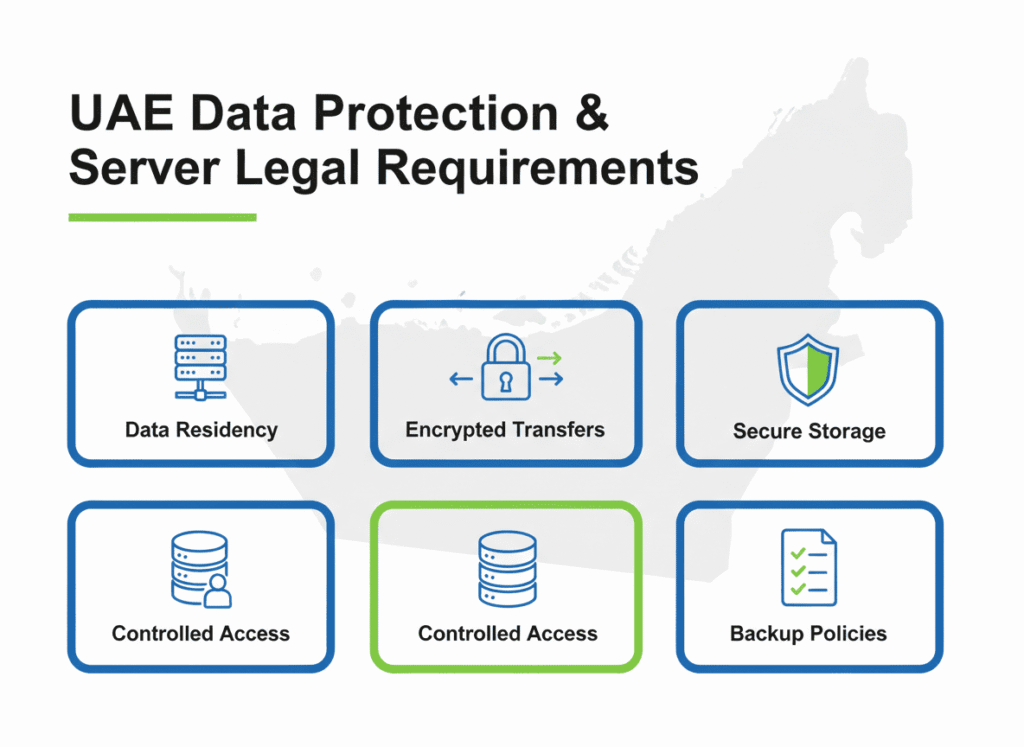
The UAE introduced federal data protection regulations to protect personal information. These laws apply to businesses that collect, process, or store user data.
The main federal law is the UAE Personal Data Protection Law (Federal Decree-Law No. 45 of 2021). Free zones such as DIFC and ADGM have their own data protection regulations. For an official overview, see the UAE Government portal on data protection laws.
This includes:
- Customer names
- Email addresses
- Phone numbers
- Payment details
- Business records
If your website collects this data, your hosting environment must protect it properly. Secure storage, controlled access, and encrypted transfers are no longer optional. They are legal expectations.
UAE Server Legal Requirements
Related read: UAE Web Hosting SEO: How Local Servers Improve Google Rankings
Certain industries must store data within the country. This is especially important for government-related, healthcare, and financial platforms.
Using international servers without checking legal obligations can create compliance risks.
Following UAE server legal requirements ensures:
- Data residency compliance
- Better regulatory alignment
- Faster response times for local users
- Improved trust with customers
Local hosting also strengthens credibility with authorities and partners.
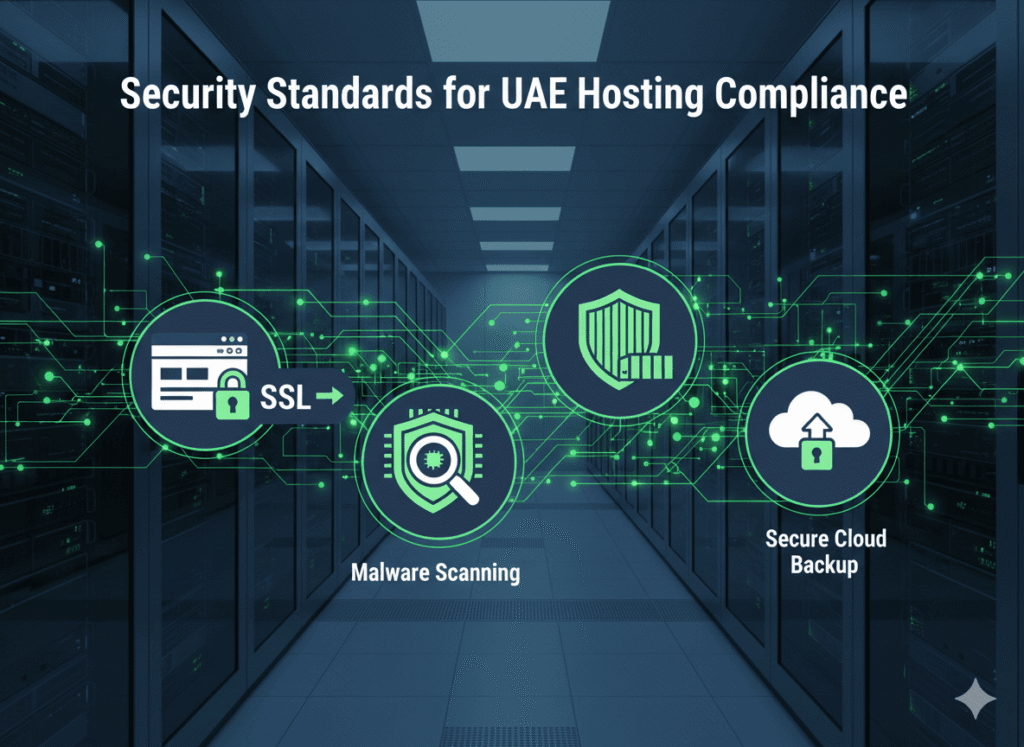
Security Standards You Must Follow
Compliance goes beyond server location. Your website must also follow cybersecurity best practices.
This includes:
- HTTPS encryption
- Secure data backups
- Firewall protection
- Regular security updates
- Controlled administrative access
A weak security setup increases both legal and operational risk.
Secure infrastructure supports both UAE web hosting compliance and long-term brand trust.
Industry-Specific Regulations
Different sectors face different rules. For example:
- Financial services must follow strict data security policies
- Healthcare platforms must protect patient information
- E-commerce websites must secure payment processing
Businesses operating in free zones may also have additional compliance layers.
Always review sector-specific requirements before selecting a hosting solution.
Benefits of Choosing a Compliant Local Hosting Provider
Local hosting providers understand regulatory expectations. They design infrastructure that aligns with UAE laws.
Benefits include:
- Stronger legal alignment
- Faster website performance inside the UAE
- Local technical support
- Reduced cross-border data risks
This is why your provider choice has a direct impact on your compliance in the UAE.
How Khaleej Host Supports UAE Web Hosting Compliance
Khaleej Host offers hosting solutions designed for the UAE market. The focus is on security, reliability, and regulatory awareness.
Our infrastructure supports:
- Secure local data storage
- Encrypted data handling
- High uptime performance
- Technical support aligned with UAE standards
Choosing the right hosting partner reduces legal uncertainty and builds operational stability.
UAE Web Hosting Compliance Checklist
Use this quick checklist to review your current setup. If you cannot tick most of these boxes, it is time to talk to your hosting provider.
- Know where your data lives: confirm the country and data center where your website, database and backups are stored.
- Use HTTPS everywhere: an SSL certificate should protect every page, especially forms and checkout.
- Collect only what you need: limit form fields to the personal data you actually use.
- Publish a clear privacy policy: explain what you collect, why, and how customers can contact you.
- Control access: use strong passwords, two-factor login and separate user roles for your team.
- Back up and test restores: keep regular backups and make sure they can actually be restored.
- Check sector rules: healthcare, finance and government-related projects may have stricter data residency requirements.
Good UAE web hosting compliance is not a one-time task. Review this list whenever you add new forms, payment options or third-party tools to your website. Our UAE web hosting plans keep your data in the country, which makes several of these steps easier.
Note: this guide is general information, not legal advice. For specific obligations, consult a qualified UAE legal advisor.
Final Thoughts
Web hosting is not just about speed and storage. It is about responsibility.
Understanding UAE web hosting compliance, respecting UAE data laws, and following UAE server legal requirements protects your business from risk.
A secure and compliant hosting setup builds trust. It also strengthens your brand reputation in a competitive digital market.
With Khaleej Host, businesses get hosting built on performance, security, and compliance.
Related read: UAE Hosting Compliance and Data Protection Guide
FAQs
What does UAE web hosting compliance mean, and why does it matter?
It means following the UAE rules on where and how your website stores and protects personal data. It keeps your business out of legal trouble, protects customer information, and builds trust.
Do businesses have to store data inside the UAE?
In some sectors, yes. Finance, healthcare and government-related services may need data stored locally. Other businesses should still check what data they collect and where it is kept.
How does offshore hosting affect data protection?
Offshore hosting moves your data across borders, which adds legal and security questions. Encrypted, well-managed hosting in the UAE gives you clearer control over where customer data lives.
Does overseas hosting cause compliance issues?
It can. Sending personal data across borders without proper safeguards may conflict with local privacy laws, which is why many companies choose local servers for more control.
Why should my business use a local UAE hosting provider?
Local providers understand national rules and run infrastructure inside the country. That helps with security, compliance and performance, and it increases customer confidence.