




Opening an online shop in the UAE is easier than ever, but a lot of stores struggle in the first few months for the same reasons: slow pages, a confusing checkout, no cash-on-delivery option, or a site that falls over during the first sale.
If you want to start an online store in UAE and avoid those problems, this is the order we recommend. It is based on what we see at Khaleej Host when we help new store owners go live.
Your launch roadmap
Step 1: Know Exactly What You Sell, and to Whom
Before you buy a domain or a theme, write down who your customer is, what problem you solve and why they should buy from you rather than a marketplace. If you sell perfume, are you aiming at luxury buyers in Dubai or price-conscious shoppers across all seven emirates? The answer shapes your pricing, design, delivery options and ads.
You will also need a trade licence that covers e-commerce activity. Requirements differ by emirate and free zone, so check the UAE government business portal or your local economic department before launch.
Step 2: Register a Domain People Trust
Keep the name short, easy to spell and free of numbers or hyphens. For a store aimed at UAE shoppers, a .ae domain signals a local business and builds trust at checkout. Register the .com too if you can, so nobody else takes it. A brand called “Desert Style” might use desertstyle.ae as the main store and redirect desertstyle.com to it.
Step 3: Choose Hosting Built for a Store
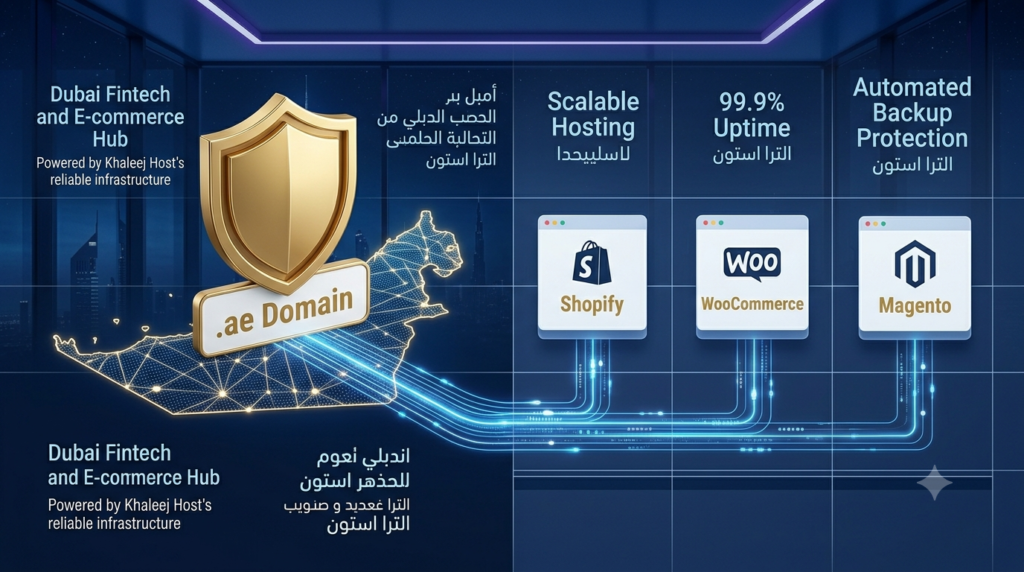
An online store works harder than a normal website. Every product search, cart update and checkout is processed by the server, so weak hosting shows up as slow pages and failed payments. Look for fast storage, at least 99.9% uptime, free SSL, daily backups and an easy upgrade path.
As a guide: a brand-new store with a small catalogue can start on good shared hosting. Once orders pick up, move to a VPS, and for big sales or seasonal peaks consider cloud hosting.
Step 4: Pick a Platform That Fits Your Skills
| Platform | Good for | Things to know |
|---|---|---|
| WooCommerce (WordPress) | Owners who want full control and low running costs | Needs good hosting; very flexible; huge plugin choice |
| Shopify | Quick start with little technical work | Monthly fees and app costs add up; less control over hosting |
| Magento / Adobe Commerce | Large catalogues and bigger budgets | Powerful but complex; needs strong servers and developers |
If you are not technical, start with whichever platform lets you focus on selling rather than maintenance. Many UAE stores choose WooCommerce on a managed hosting plan because it combines control with low monthly costs.
Step 5: Design for Buyers, Not for Awards
A store does not need to look fancy; it needs to make buying easy. Use clear product photos, simple menus, visible prices including VAT, and a layout that works perfectly on a phone, because that is where most UAE shoppers browse and buy.
Step 6: Get Payments and Delivery Right
This is where many UAE stores lose sales. Offer card payments through a trusted local gateway, digital wallets such as Apple Pay, and cash on delivery, which many UAE customers still expect. For delivery, pick a reliable courier, show delivery times and charges clearly before checkout, and publish a simple returns policy.
Step 7: Make the Store Fast
Shoppers leave slow stores. Compress product images, avoid heavy page builders, keep plugins to the ones you really use and turn on caching. Then test with PageSpeed Insights, especially the mobile score.
Step 8: Test Everything Before Launch
Place real test orders. Check product pages, add to cart, coupon codes, every payment method, order emails and the whole flow on a phone. Ask a friend to buy something without your help; they will find problems you cannot see any more.
Step 9: Launch, Then Bring In Visitors
Going live is the start, not the finish. Use social media ads and Google Ads for quick sales, post regularly on Instagram and TikTok, and start basic SEO on your category and product pages for long-term traffic. Start with a small budget, see what sells, then scale. Before any big campaign, make sure your hosting can handle the extra visitors.
Mistakes That Hurt New UAE Stores
- choosing the cheapest hosting and crashing during the first sale
- no cash-on-delivery option
- prices that change at checkout because of hidden fees
- no clear delivery or returns policy
- launching without testing on mobile
Start an Online Store in UAE With Khaleej Host
We can set you up with a .ae domain, fast and secure hosting for your store, business email on your own domain, and simple upgrades as orders grow. If you are planning a launch, talk to us and we will suggest the right setup.
Conclusion
To start an online store in UAE successfully, get the basics right in the right order: know your customer, register a trusted domain, choose hosting built for e-commerce, keep checkout simple with local payment options, and test before you launch. Build it step by step, and the store will be ready when customers arrive.
FAQs
How much does it cost to start an online store in the UAE?
It depends on your setup. The main costs are the trade licence, domain, hosting, platform or theme, payment gateway fees and marketing. A small store can start on a modest budget and upgrade as it grows.
Which e-commerce platform is best for beginners?
Shopify is quick to start with little technical work. WooCommerce gives more control and lower monthly costs if you have reliable hosting.
Do I need expensive hosting for a small online store?
No, but you do need reliable hosting. A slow or unstable store loses customers. Start with a good plan and upgrade as orders grow.
How long does it take to launch an online store?
A simple store can go live in a few days. Larger catalogues, custom design and payment approvals can take several weeks.
Do I need cash on delivery for a UAE online store?
It is strongly recommended. Many UAE shoppers still prefer to pay on delivery, especially when buying from a new store.