
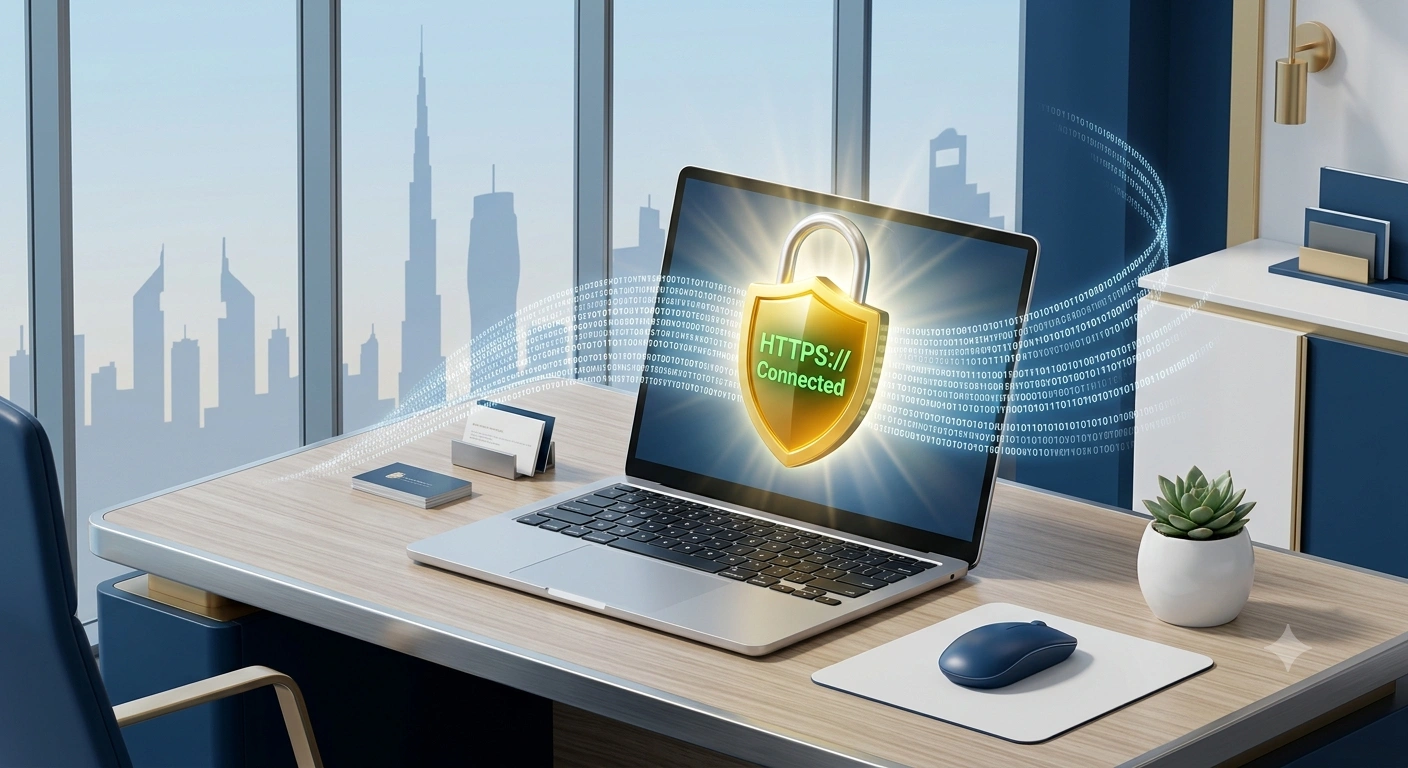
Open any modern website. Look at the address bar. If you see a small lock icon and “https,” that site is using SSL. If not, most browsers will warn you before you even enter. That alone tells you how important SSL has become. But many business owners still treat it as optional. It’s not. An SSL certificate is not just a technical feature. It’s about trust, security, and how your website is seen by both users and search engines.
At Khaleej Host, we consider SSL a basic requirement, not an upgrade. Let’s break it down in a simple way.
What Is an SSL Certificate (In Simple Words)
SSL stands for Secure Sockets Layer. In practical terms, it creates a secure connection between your website and the user’s browser. This means:
- Data sent between the user and your website is encrypted
- No one can easily read or steal that data
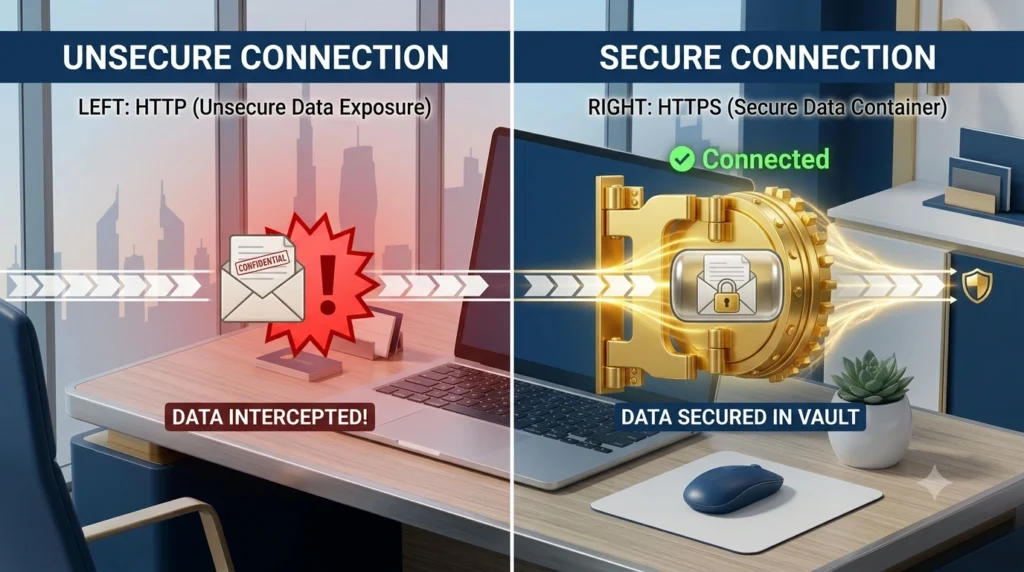
Without SSL, information travels in plain text. Anyone with the right tools can intercept it. With SSL, that information is locked.
What Changes When You Install SSL
The most visible change is your website URL.
- Without SSL → http://yourwebsite.com
- With SSL → https://yourwebsite.com
That “s” at the end stands for secure.
Users also see
- A lock icon in the browser
- No security warnings
- A safer browsing experience
These small signals build trust instantly.
Why SSL Is Critical for UAE Websites
The UAE has a strong digital market. People shop online, book services, and share personal details regularly. That means users expect security. If your website is not secure, they notice.
What happens without SSL
- Browsers show “Not Secure” warning
- Users hesitate to proceed
- Trust drops immediately
In a competitive market like the UAE, that hesitation costs you customers.
SSL Builds Trust (Faster Than Anything Else)
Trust is fragile online. Users decide within seconds whether your website feels safe. If they see security warnings, they don’t take risks. They leave.
With SSL
- Your site looks professional
- Users feel safe entering information
- Conversions improve
Real example:
A service website switched from HTTP to HTTPS. Form submissions increased because users felt more comfortable sharing details. Small change. Big impact.
It Protects Sensitive Information
Even if you don’t run an online store, your website still collects data. Think about:
- Contact forms
- Login details
- Email subscriptions
Without SSL, this data can be exposed. With SSL, it stays encrypted and secure. For e-commerce websites, this becomes even more critical because of payment information.
SSL Is Important for SEO
Search engines prefer secure websites. Google has clearly indicated that HTTPS is a ranking factor.
Without SSL
- Lower trust signals
- Possible ranking disadvantage
- Reduced visibility
With SSL
- Better credibility
- Improved chances of ranking
- Stronger SEO foundation
It may not push you to the top alone, but without it, you are already behind.
Browsers Actively Warn Users Now
This is something many people ignore. Modern browsers don’t stay silent anymore. If your website doesn’t have SSL:
- Chrome shows “Not Secure.”
- Users get warning messages
- Some features may not work properly
This creates a bad first impression before users even see your content.
Types of SSL Certificates (Simple Overview)
You don’t need to go deep into technical details, but it helps to understand the basics.
1. Domain Validation (DV)
- Basic level
- Quick setup
- Good for small websites
2. Organization Validation (OV)
- Verifies business identity
- More trust than DV
3. Extended Validation (EV)
- Highest level of trust
- Shows company details in the browser
For most small to medium businesses, DV or OV is enough.
Common Mistakes Businesses Make
Many websites still get SSL wrong.
Common issues
- Not installing SSL at all
- Installing it, but not forcing HTTPS
- Mixed content errors (some pages still insecure)
- Ignoring renewal
These mistakes reduce the benefits of SSL.
How Khaleej Host Makes SSL Simple
SSL should not feel technical or complicated. With Khaleej Host, you get:
- Easy SSL setup
- Secure configuration
- Support for HTTPS redirection
- Reliable hosting environment
This ensures your website stays secure without extra effort.
Quick Checklist
Check your website now:
- Does your URL start with HTTPS?
- Do you see a lock icon?
- Are there any browser warnings?
- Are all pages secure?
If not, you need to fix it immediately.
Conclusion
SSL is no longer optional. It protects your users, builds trust, and improves your website’s credibility. In the UAE, where online competition is strong, even small trust signals matter. A secure website feels reliable. An insecure one pushes users away. If you’re serious about your online presence, SSL is the first step.
With Khaleej Host, you can secure your website properly and focus on growing your business with confidence.
FAQs
SSL: SSL encrypts the data shared between your website and the users. This secures sensitive information, such as passwords, contact details, and payment data, from interception or misuse.
SSL and small sites Yes, even the smallest of websites need SSL. It provides trust, avoids browser warnings, and enhances user experience. In the absence of this, users might exit before even making a visit to your website.
Search engines take SSL into consideration while ranking websites. It does not promise a higher ranking, but it is guiding you to build your credibility while making sure that you are not going the wrong way with your site.
Yes, and the hosting provider also provides a free SSL certificate. They are usually simple and serve most of the websites. Paid SSL solutions provide higher validation and other trust symbols.
Your site only remains secure until your SSL expires. Your site may be avoided by users, and browsers will warn them (and it cannot use a browser at all). To make sure the users and customers put their trust in us and feel secure, we need to renew SSL before expiration.