

Shared hosting looks simple at first. It is affordable. Easy to start. No technical headache. But once your website starts growing, small issues begin to show up. Pages slow down. Sometimes your site goes offline. You don’t always know why. This is where most people get stuck.
At Khaleej Host, we see this every day. Many users don’t have a bad website. They just have the wrong hosting setup or poor server conditions.
Let’s break this down clearly. No confusion. Just real problems and practical fixes.
What Is Shared Hosting (Quick Context)
Shared hosting means your website lives on a server with many other websites. All of you share:
- CPU
- RAM
- Bandwidth
This works well for small sites. But sharing resources also creates limits.
Common Shared Hosting Problems
1. Slow Website Speed
This is the most common issue.
If one website on the server suddenly gets high traffic, it can consume more resources. Your site becomes slow even if nothing has changed on your end.
Real example:
A small online store runs fine all week. On weekends, another site on the same server runs ads. Traffic spikes. The store becomes slow and loses customers.
How to Avoid It
- Choose a hosting provider that controls server load
- Use caching plugins
- Optimize images before uploading
- Avoid heavy themes
At Khaleej Host, servers are monitored to prevent overload. That keeps performance stable.
2. Frequent Downtime
Your website goes offline without warning. This damages trust. Search engines also notice downtime. Rankings can drop over time.
Common causes
- Server overload
- Poor maintenance
- Cheap hosting infrastructure
How to Avoid It
- Pick hosting with an uptime guarantee (99.9% or higher)
- Avoid extremely low-cost providers with no reliability
- Monitor uptime using tools
Khaleej Host focuses on stable infrastructure, so downtime is rare and handled quickly.
3. Security Risks
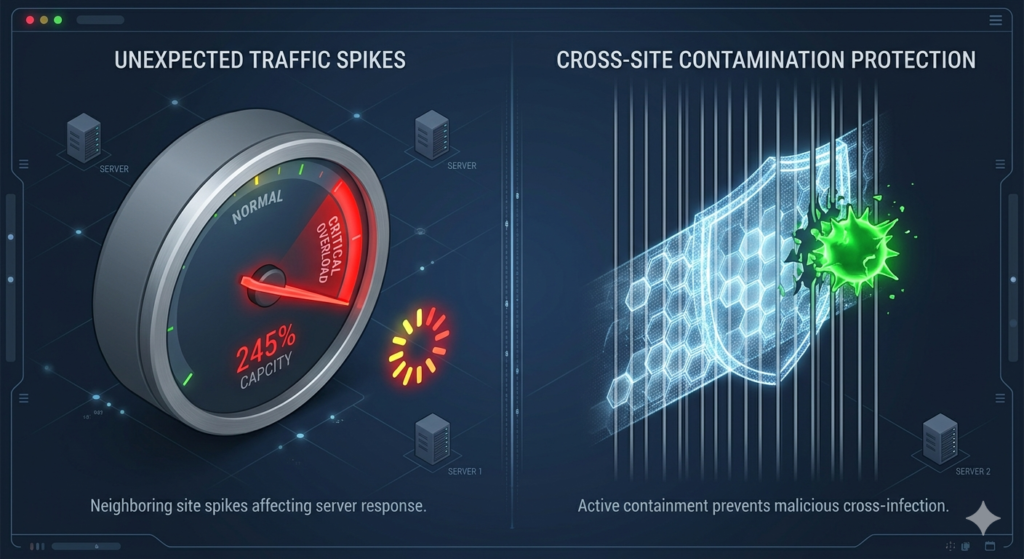
Shared hosting means sharing space. If one website gets hacked, others can also be affected.
This is called “cross-site contamination.”
Risks include
- Malware injection
- Data theft
- Blacklisting by search engines
How to Avoid It
- Use strong passwords
- Install an SSL certificate
- Keep plugins and CMS updated
- Choose a host with strong isolation systems
Khaleej Host uses secure server environments, which reduces the risk of one site affecting another.
4. Limited Resources
Shared hosting comes with limits. You may face:
- Limited storage
- Restricted bandwidth
- CPU usage caps
When your site grows, these limits start blocking performance.
Signs you’ve hit the limit
- Website crashes during traffic spikes
- Slow admin panel
- Errors like “resource limit reached.”
How to Avoid It
- Track your usage regularly
- Upgrade plan before hitting limits
- Optimize scripts and databases.
5. Poor Customer Support
Many hosting providers offer slow or unhelpful support. When your website goes down, waiting hours for a reply is frustrating.
How to Avoid It
- Choose hosting with real 24/7 support
- Test support before buying
- Avoid providers with only ticket systems
At Khaleej Host, support is direct and practical. You get clear answers, not copy-paste replies.
Hidden Problems Most People Ignore
These don’t show immediately but hurt over time.
Overloaded Servers: Some companies put too many websites on one server to cut costs.
Outdated Technology: Old PHP versions or slow storage affect performance.
No Backup System: If your site crashes, you may lose everything.
What You Should Do
- Ask about server limits
- Confirm backup frequency
- Choose updated infrastructure
How Khaleej Host Solves These Problems
Not all shared hosting is the same. The difference is in how it is managed. Khaleej Host focuses on:
- Balanced server load (no overcrowding)
- Fast storage for better speed
- Strong security layers
- Regular backups
- Clear and responsive support
This means you still get the affordability of shared hosting, but without the usual headaches.
When You Should Move Beyond Shared Hosting
Shared hosting is not bad. It just has limits. You should upgrade when:
- Your traffic grows consistently
- Your website earns revenue
- You need more control and speed
Options include:
- VPS hosting
- Cloud hosting
Khaleej Host helps you shift smoothly when the time is right. No sudden changes. No technical confusion.
Conclusion
Shared hosting works well for beginners. It keeps costs low and setup simple. But problems appear when servers are poorly managed. Slow speed, downtime, and security risks are not “normal.” They are signs of poor hosting quality.
If your hosting provider manages resources properly, most of these issues never become serious. That’s where Khaleej Host stands out. It gives you a stable, secure, and practical hosting environment without unnecessary complexity.
FAQs
Yes, shared hosting is ideal for beginners. It is affordable and easy to manage. You don’t need technical skills. However, you must choose a reliable provider to avoid common issues like slow speed and downtime.
Your website may slow down due to other sites using more server resources. Poor optimization and heavy files also affect speed. Choosing a well-managed hosting provider helps maintain stable performance.
Yes, slow speed and downtime can hurt SEO rankings. Search engines prefer fast and stable websites. Good hosting improves user experience, which directly supports better search visibility and rankings.
Shared hosting is safe if proper security measures are in place. Risks increase when servers lack isolation. Choosing a host with strong protection systems reduces the chances of hacking and data issues.
You should upgrade when your traffic increases, your site becomes slow, or you need more control. Growing websites often move to VPS or cloud hosting for better performance and flexibility.