
Speed changes how we see things. In the UAE market, perception shapes revenue. When someone lands on your website, they decide within seconds whether your brand feels serious or careless. A fast website communicates trust. A slow one creates doubt. That is why businesses constantly search for the fastest web hosting in UAE, not for vanity, but for performance that translates into rankings and conversions.
However, “fast” is not a slogan. It is the result of infrastructure, architecture, and disciplined resource management.
Let’s examine what truly defines speed and how serious providers like Khaleej Host approach it.
What Defines Fast Web Hosting?
Speed in hosting is multi-layered. It begins at the server level and ends at the user’s browser. A website does not load quickly by accident.
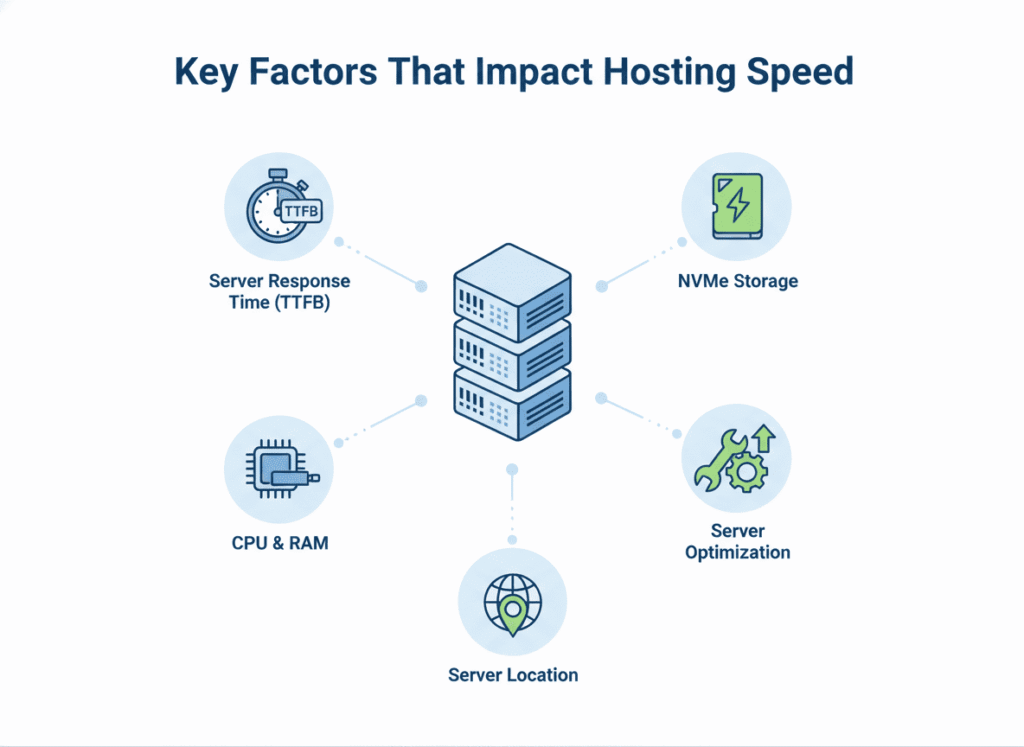
Several technical elements influence real performance:
- Server response time (Time To First Byte)
- Storage technology (SSD vs NVMe)
- CPU and RAM allocation
- Server software optimization
- Traffic handling capacity
- Geographic server location
Each of these factors plays a role. When one underperforms, the entire experience slows down. For example, even a beautifully designed website will lag if database queries take too long. Likewise, strong storage cannot compensate for overloaded servers. True speed comes from alignment across all performance layers.
Why Speed Matters More in the UAE
The UAE digital ecosystem is highly competitive. Businesses invest aggressively in paid ads, SEO, and social media campaigns. But all that investment loses value if the website itself responds slowly.
Mobile usage dominates the region. Users browse quickly. They compare alternatives instantly. A delay of one or two seconds increases bounce rate dramatically.
Fast hosting impacts:
- User engagement
- Google rankings
- Conversion rates
- Brand credibility
- Customer retention
Search engines also measure real user experience. Core Web Vitals track loading performance and responsiveness. Poor hosting can weaken these metrics and push rankings down.
Therefore, selecting high-speed web hosting UAE is not just technical, it is strategic.
Speed Test Comparison: What Actually Changes Results
When businesses compare hosting providers, they often look at a single number from a speed testing tool. That is incomplete.
A proper comparison must consider multiple dimensions.
1. Server Location and Latency
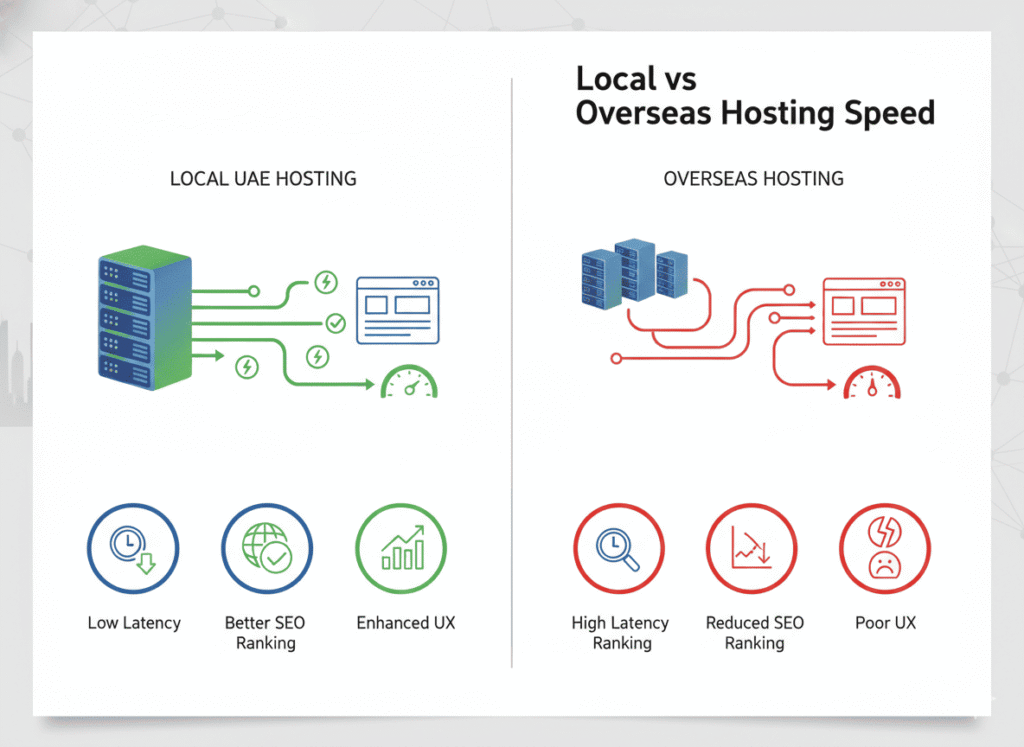
Distance creates delay. If your audience is in Dubai but your server operates from Europe or North America, every request travels farther. This adds milliseconds to every page load.
Hosting closer to your target audience reduces latency and improves:
- Page responsiveness
- Checkout speed
- API communication
- SEO performance in local searches
Regional optimization matters.
2. Storage Technology
Traditional hard drives are obsolete for serious websites. The standard SSD improved performance significantly. However, NVMe storage operates on a faster interface, allowing direct communication with the processor.
The result:
- Faster database queries
- Reduced backend processing time
- Improved performance during high traffic
- Smoother admin dashboard experience
For e-commerce and dynamic websites, this difference is noticeable. Khaleej Host integrates NVMe storage to enhance database-heavy applications like WordPress and WooCommerce.
3. Server Configuration
Hardware alone does not guarantee speed. Configuration determines how efficiently resources are used. Important configuration elements include:
- Updated PHP versions
- Optimized web server stack
- Server-level caching
- Balanced resource allocation
- Controlled server occupancy
An overloaded server can slow down even the fastest hardware. Responsible infrastructure management separates premium hosting from overcrowded budget environments.
Shared Hosting vs VPS: Which Is Faster?
The answer depends on implementation. Shared hosting can perform well when resource distribution is controlled. However, when too many websites share the same server, congestion becomes inevitable. VPS hosting provides dedicated resources, which improve stability during traffic spikes.
Performance differences usually appear in:
- Traffic surge scenarios
- E-commerce checkout processes
- Large database operations
- Media-heavy websites
A well-optimized NVMe shared server can outperform a poorly configured VPS. What matters most is infrastructure discipline.
Real-World Example: Performance Under Pressure
Imagine two identical e-commerce websites targeting customers in Abu Dhabi. Website A uses low-cost hosting with overseas servers and traditional SSD storage. Website B uses NVMe-based infrastructure optimized for regional traffic. Both run a weekend promotion and receive 800 visitors in a few hours.
Website A begins to lag. Product pages load slowly. Checkout page delay. Some transactions fail. Customers abandon carts.
Website B maintains consistent response times. Pages load smoothly. Transactions complete without interruption. The difference lies entirely in the hosting architecture. Speed only becomes visible when traffic increases. That is when weak infrastructure reveals itself.
How Speed Directly Affects SEO
Search engines prioritize fast-loading websites. Technical performance influences:
- Crawl efficiency
- Core Web Vitals
- Bounce rate
- Time on site
- Ranking stability
Slow hosting increases server response time. That weakens SEO signals.
When infrastructure performs consistently, websites gain a natural advantage in competitive UAE search results. For businesses investing in digital marketing, hosting becomes the foundation that supports all other efforts.
Why “Unlimited” Cheap Hosting Often Fails
Budget providers frequently advertise unlimited bandwidth and storage. In reality, resources are shared aggressively among users.
This leads to:
- Server congestion
- Inconsistent load times
- Slower database performance
- Higher downtime risk
- Reduced stability during peak traffic
Speed tests during low traffic may appear acceptable. However, real-world business traffic exposes performance limits. Reliable providers prioritize balanced capacity over exaggerated marketing promises.
How Khaleej Host Maintains High-Speed Performance
Khaleej Host focuses on performance stability rather than overselling resources. Their hosting environment emphasizes:
- NVMe-powered storage for faster data processing
- Optimized server configuration for dynamic websites
- Balanced user allocation per server
- Consistent uptime monitoring
- Infrastructure designed for business websites
This structure supports stable performance across different traffic levels. Instead of relying on theoretical speed claims, the focus remains on practical results under real usage conditions.
Who Truly Needs the Fastest Hosting?
Not every website demands enterprise-level infrastructure. However, performance becomes critical for:
- Ecommerce stores handling daily transactions
- Corporate websites generating high-value leads
- Agencies managing multiple client websites
- High-traffic blogs monetized through ads
- Businesses running paid marketing campaigns
In these scenarios, even small delays can impact revenue. Fast hosting ensures that marketing investments are not wasted due to technical limitations.
Final Perspective
Speed is not decoration. It is operational efficiency.
The fastest web hosting in UAE is defined by consistent low response times, optimized storage, responsible server management, and regional performance alignment.
When hosting performs reliably:
- SEO improves
- User trust strengthens
- Conversion rates increase
- Brand perception elevates
Khaleej Host builds infrastructure designed to support serious business growth, not temporary performance spikes. In the UAE’s competitive online landscape, milliseconds influence outcomes. And when your website responds instantly, your business feels stronger from the first click.
Frequently Asked Questions
An ideal Time To First Byte is generally under 200 milliseconds. Lower response times indicate efficient server processing and optimized infrastructure.
Yes. NVMe storage improves database performance and reduces loading delays, especially for e-commerce and dynamic websites.
Not necessarily. A well-managed shared hosting environment can perform efficiently. However, VPS provides dedicated resources that improve stability during high traffic periods.
Hosting closer to your audience reduces latency. For UAE businesses, regional optimization improves load times and enhances local SEO performance.
Yes. Faster websites reduce bounce rates and increase user satisfaction, which positively impacts lead generation and e-commerce sales.