
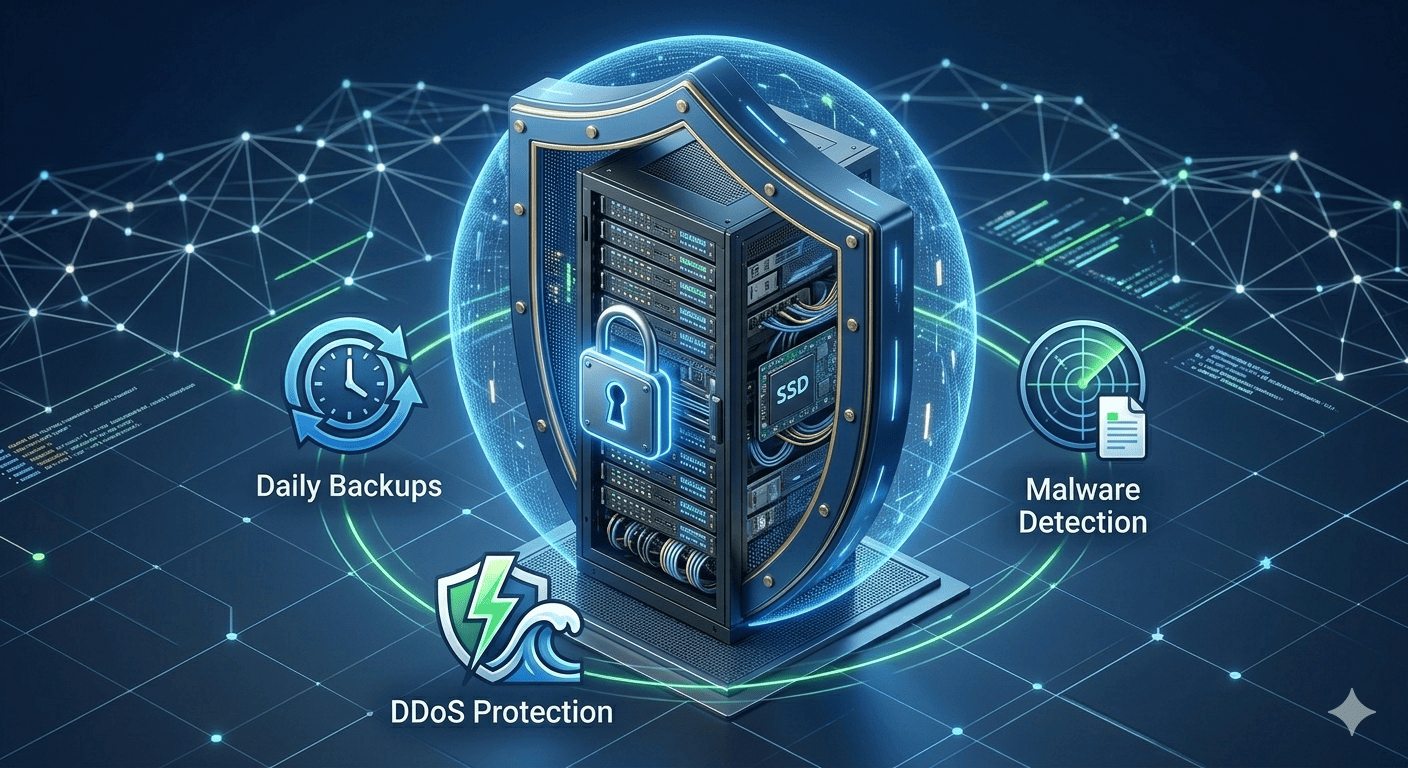
With all of the business we conduct online today, a website is one of your most valuable assets. It is the face of your brand, the link between you and customers, often a repository of significant data. As such, website security is more critical than ever before.
Every year, cyber threats become more prevalent. Websites that have weak protection or outdated systems are usually the target of hackers. Even small sites can fall victim. This is the reason you need to select a web host with good security essentials.
In 2026, a reputable hosting company should protect your setup from different online threats and maintain your website’s functionality. When selecting a hosting service, businesses should thoroughly check which security tools the provider has.
Reliable hosting providers such as Khaleej Host focus strongly on website protection by integrating multiple security layers into their hosting infrastructure.
This guide highlights the key security features website owners should look out for when choosing a web host.
SSL Certificates for Secure Connections
An SSL certificate is one of the very basic security features. The abbreviation SSL stands for Secure Sockets Layer, under which it establishes a secure link between the website & visitor’s browser.
If a site is using SSL, the address will begin with https rather than just http. This tiny modification indicates that the information entered on the site is encrypted. SSL protection is important for:
- login forms
- contact forms
- online payments
- personal data submission
When visitors see the secure connection symbol in their browser, they also trust websites more. Many search engines also favor secure websites, which promote improved rankings.
Many hosting companies, including Khaleej Host, provide SSL certificates as part of their hosting packages to help websites maintain secure connections.
Regular Website Backups
Backups are crucial safety nets for any website. In case something go wrong, backups allow you to quickly restore your website.
There can be many reasons issues happen. Website files can be corrupted due to a hacker attack, a software error, or deletion.
Here are a few key offerings from a good hosting provider:
- automatic daily backups
- easy restore options
- secure backup storage
Those features are designed to never lose your website data permanently. Hosting providers like Khaleej Host emphasize automated backup systems to help businesses quickly recover their websites in case of unexpected issues.
Malware Scanning and Removal
Malware (short for malicious software) is the umbrella term for harmful software that attackers use to destroy websites or steal information. It can seep into a website before the owner even realizes it. Your web host should have security scanning tools that scan websites regularly. If any suspicious activity is detected, the system can alert the website owner or quarantine the threat.
Important malware protection features include:
- automatic malware scanning
- threat detection alerts
- quick malware removal tools
This way to regularly monitor the website and make it easy for visitors. Professional hosting companies such as Khaleej Host include malware protection systems that monitor servers continuously.
Firewall Protection
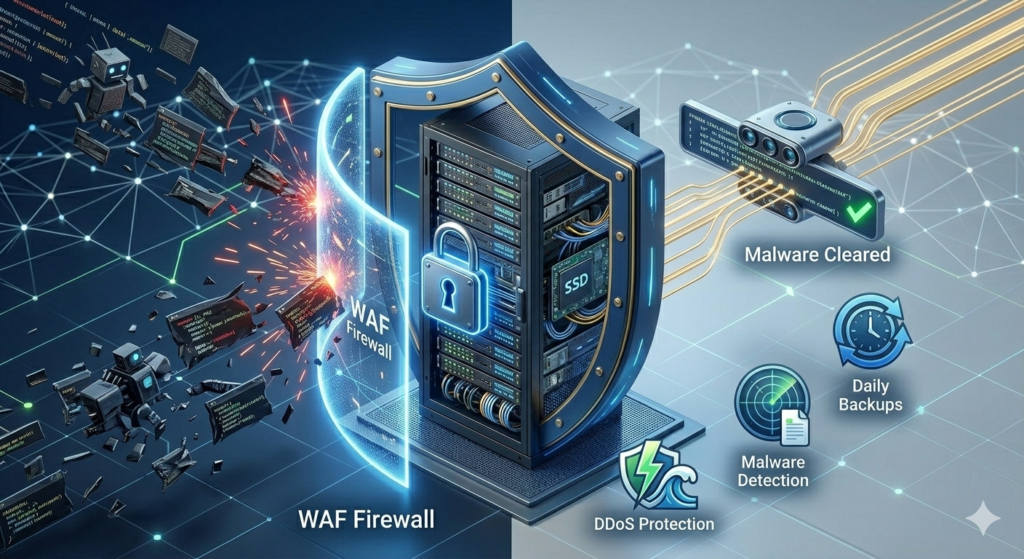
So, a firewall serves as an intermediary between your website server and would-be attackers. It filters incoming traffic, stopping suspicious requests before they hit the website. Web application firewalls are particularly useful, as they filter traffic that may try to exploit vulnerabilities on the website.
A good firewall can help protect from:
- hacking attempts
- malicious bots
- suspicious traffic
- unauthorized access attempts
This makes insecure hacks and breaches less likely. Secure hosting environments like those provided by Khaleej Host typically integrate firewall systems to filter harmful traffic.
DDoS Protection
DDoS stands for Distributed Denial of Service, and it is an attack in which attackers send massive amounts of traffic to a website until the server is overwhelmed. As a result, the website may perform slowly, or it might not work at all.
Reputable hosts implement a DDoS protection system that will be able to detect anomalous traffic patterns and deny malicious requests. This assists the server in continuing to continue functioning normally even when there are sudden traffic spikes.
Hosting companies such as Khaleej Host implement DDoS protection technologies to keep websites accessible during traffic attacks.
Secure Data Centers
The physical security of servers also affects website security. An ideal Data Center should have extreme protection from unauthorized access. Professional hosting companies typically have secure data centers that:
- 24/7 monitoring
- restricted physical access
- surveillance systems
- backup power supply
These protections shield the hardware that stores website data. Reliable providers like Khaleej Host maintain secure server environments to ensure that website data remains protected.
Regular Software Updates
One of the most common causes of security problems is outdated software. Hackers can exploit vulnerabilities in old versions of applications.
A good web host must ensure that the server systems are always up-to-date. Some supportive hosting providers also assist bloggers in automatically updating critical website software. Maintaining up-to-date systems prevents many common security threats.
Hosting providers such as Khaleej Host ensure that server infrastructure remains updated to maintain system security.
Strong Access Control
This is not something; everyone should just have access to a website server. Due to this, only the necessary users will have access and permissions to control key website configurations.
Typically, secure hosting platforms offer the following tools:
- strong password requirements
- two-factor authentication
- user permission settings
- login monitoring
These characteristics keep unauthorized users from taking over the site.
Security Monitoring and Alerts
Ongoing monitoring helps with early threat detection. If you get a hosting provider with strong security systems, they monitor their servers 24/7. In cases of unusual activity, the system can alert the website owner or block malicious actions automatically.
Finding things early helps prevent problems from becoming serious. Security-focused hosting providers like Khaleej Host use continuous monitoring systems to detect threats quickly.
Why Security Matters More in 2026
The online security threats never seem to decrease each year. Businesses store vast amounts of data on their websites today, from customer profiles and business communications to payment information.
Without strong protection, a security breach can cause serious problems, such as:
- website downtime
- loss of customer trust
- data theft
- search engine penalties
For this reason, companies need to make hosting security a necessity rather than an optional feature.
Choosing a Secure Hosting Provider
Not all web hosting services are the same. When choosing a web host, businesses should look at much more than just price and storage space. Security features are equally important.
Special features provided by a good hosting provider include:
- SSL certificates
- regular backups
- malware protection
- firewall security
- DDoS protection
- continuous monitoring
They will help ensure websites are secure and running smoothly. Hosting providers like Khaleej Host focus on combining these essential security features to provide reliable website protection.
Conclusion
Website security has become an essential component of any online business. Cyberattacks became common in 2026, thus businesses had to ensure that their websites were secure.
A reliable hosting provider keeps the data of users secure and helps prevent attackers from getting to your site in the first place.
With essential cover such as SSL encryption, backups, malware monitoring and firewall systems in place, businesses can approach a safer online presence.
So, a secure website not only saves your data from crashing down but also assures the visitors as well as customers.
Hosting companies such as Khaleej Host aim to provide these essential protections so businesses can run their websites with confidence.
FAQs
Security against hacking attempts, malware infections, and data theft. Web hosting security: Your website will remain online, and the data will remain secure with strong security.
SSL is a type of security certificate that encrypts all data exchanged between the website and the visitor’s browser. It ensures the security of information and enhances website reliability.
Normally, a website would have daily backups. Regular backups provide peace of mind that if their website is damaged or hacked, their data will be restored quickly.
Malware Protection: It scans websites for malware that would damage or steal any data from the website. Most quality hosting providers will have automatic scanning and removal utilities.
Yes. Some hackers go for smaller websites, hoping they have weaker security. This is exactly why all websites should utilize protected hosting that has robust protection offerings.